Cocktail Bitters Guide: Aromatic, Orange, and Beyond
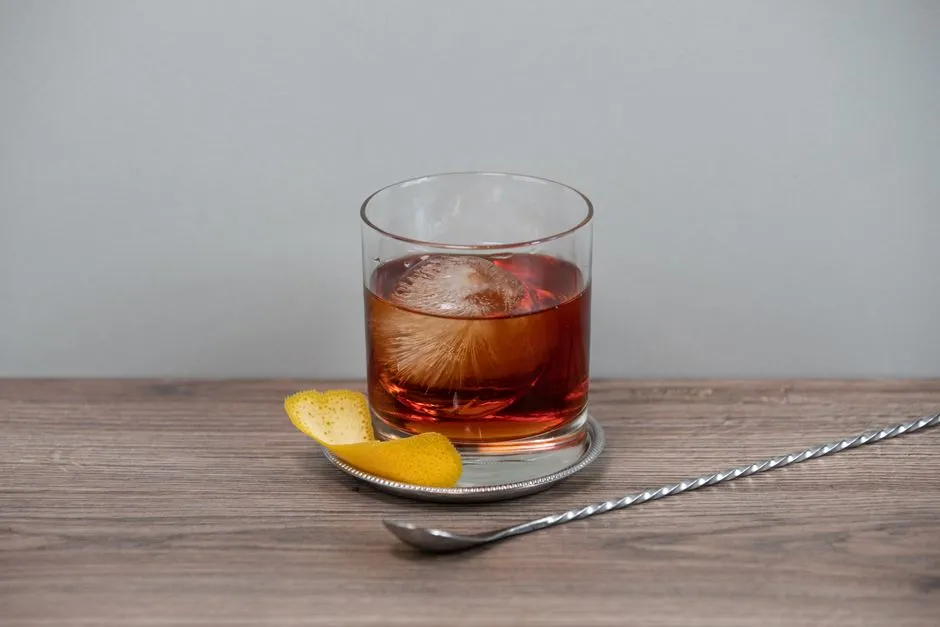
- What are cocktail bitters?
- Read the recipe before choosing the bottle
- What do aromatic bitters do?
- When do orange bitters make sense?
- What sits beyond aromatic and orange?
- How should you measure a dash?
- Compare bitters without losing the drink
- Diagnose a bitters problem
- Store and serve bitters responsibly
- Frequently asked questions
- Sources
What are cocktail bitters?
Cocktail bitters are concentrated flavourings, most often added in dashes to change a drink's aroma and balance without adding much volume. Aromatic bitters bring a broad spiced profile; orange bitters foreground citrus; other bottles have their own named ingredients and house styles. These are useful descriptions, not a universal quality ranking. Start with the exact bitters named in a trusted recipe, then compare one change at a time.
Bitters also come with historical baggage. A Smithsonian account traces them through patent medicines with dubious reputations and into cocktail use. That history does not turn a modern bottle into a treatment. Here, bitters are flavouring for adult drinks. No digestive, therapeutic or other health benefit is implied.
Read the recipe before choosing the bottle
The quickest route through the bitters shelf is to begin with a drink, not a collection. A recipe may specify a named bottle, a broad style such as orange bitters, or simply aromatic bitters. Those instructions are not interchangeable:
- A named product means that product is part of the published formula. A substitute may make a good drink, but it is a new test.
- A style description gives more room, but bottles within the style can still taste different. Read the producer's flavour and ingredient information.
- No bitters listed is not an invitation to add them automatically. First make the stated recipe.
This matters because a dash is small but deliberate. In the International Bartenders Association (IBA) formulas, an Old Fashioned uses a few dashes of Angostura bitters, a Manhattan uses one dash of Angostura, a Tuxedo uses three dashes of orange bitters, and a Vieux Carré uses two dashes of Peychaud's. Each choice sits inside a different set of ingredients.
If you are building a small home bar, one aromatic bottle makes sense only if it serves drinks you actually make. Our classic cocktail guide can help you choose the drink family first.
What do aromatic bitters do?
"Aromatic" is a broad label rather than one fixed formula. The familiar use is in spirit-forward drinks where a small measured addition joins sugar, spirit, vermouth or water. The IBA Old Fashioned combines whiskey, sugar, water and Angostura bitters. Its Manhattan combines rye whiskey, sweet red vermouth and one dash of the same bitters.
That does not prove aromatic bitters suit every whiskey drink. It shows two established placements: alongside sugar in an Old Fashioned and alongside sweet vermouth in a Manhattan. Make those distinctions visible when adapting a recipe.
A practical first bottle should therefore follow your actual menu. If Old Fashioneds and Manhattans are the plan, the cited formulas give aromatic bitters a clear job. If neither drink interests you, the label alone is not a reason to buy it.
When do orange bitters make sense?
Orange bitters do more than make a garnish taste louder. Their role depends on the complete formula. The IBA Tuxedo places three dashes beside Old Tom gin, dry vermouth, maraschino and absinthe. The IBA Casino uses two dashes with Old Tom gin, maraschino and fresh lemon juice.
Those examples put orange bitters in both a stirred, vermouth-led drink and a shaken citrus drink. They do not establish one dose for every Martini or sour. Follow the recipe's dash count, then record any change.
If a bottle says orange bitters, still inspect its label and producer information. Citrus emphasis does not tell you every botanical, colour additive, allergen or alcohol detail. Anyone managing an allergy needs the information for the exact product, not a category-level assurance.
What sits beyond aromatic and orange?
Some recipes specify a distinctive bottle rather than asking for generic bitters. The IBA Vieux Carré, for example, calls for two dashes of Peychaud's with rye whiskey, Cognac, sweet vermouth and Bénédictine. That is a useful lesson in recipe fidelity: "bitters" is not one neutral ingredient that can be swapped without consequence.
There are also recipes in which bitters are not a tiny accent. The IBA Trinidad Sour uses 45 ml of Angostura bitters, alongside 30 ml orgeat, 22.5 ml lemon juice and 15 ml rye whiskey. It is an exception worth knowing because it prevents a false rule: bitters are usually dashed, not always dashed.
Do not improvise a large bitters pour from a recipe written in dashes. A 45 ml bitters build is a specific published drink with its own sweetener, acid and spirit balance. Follow the complete formula rather than scaling up one ingredient in isolation.
How should you measure a dash?
A dash is the amount a dasher bottle releases in one deliberate motion. The quantity can vary with the bottle, fill level, angle and movement, so converting every dash into one universal millilitre figure creates false precision.
For repeatable home mixing:
- Use the same bottle and dasher top for the comparison.
- Hold it the same way for each dash.
- Count aloud as you add the recipe's stated number.
- Write down the bottle, dash count and drink formula.
- Taste the completed drink before changing anything.
If the cap, dasher or bottle is damaged, stop and replace or decant it into a suitable clean, labelled container. Do not use a chipped bottle or pour through broken glass.
Compare bitters without losing the drink
The following is a Circa '33 tasting method, not an official cocktail formula. Make one familiar recipe at its stated proportions, divide the liquid evenly before adding bitters, and finish each small portion with one measured dash of a different bottle. Keep glass, temperature, dilution and garnish consistent.
Compare aroma first, then the whole sip. Write concrete notes: orange peel, baking spice, anise, sharp bitterness, lingering sweetness. "Better" is less useful than "the orange bottle makes the citrus more obvious while the aromatic bottle makes the spice more obvious."
Use small comparison portions rather than making several full-strength cocktails. A tasting is still alcohol consumption. The U.S. National Institute on Alcohol Abuse and Alcoholism defines one standard drink as 0.6 fluid ounces, or 14 grams, of pure alcohol, and notes that customary servings do not necessarily match that unit. Cocktail strength depends on every alcoholic ingredient, not the number of dashes alone.
Diagnose a bitters problem
If the drink tastes wrong, identify the change before reaching for another dash.
- Bitters dominate: Do not sweeten or enlarge the finished drink blindly. Remake a smaller test with the recipe's original count.
- Bitters disappear: Check that the bottle actually dispensed liquid, then compare one additional dash in the next controlled sample.
- The flavour seems different from last time: Confirm the bottle, fill level, dash motion and the rest of the recipe. More than one variable may have moved.
- The drink is harsh or warm: Bitters may not be the cause. Check spirit measures, chilling and dilution.
- A substitute tastes unfamiliar: Label it as a variation. Do not rename it as the cited classic.
Our Old Fashioned method gives aromatic bitters a measured place inside one complete drink rather than treating them as a free-floating fix.
Store and serve bitters responsibly
Follow the exact bottle's storage directions and alcohol statement. Keep the cap closed, retain the original label and store it out of children's and pets' reach. Do not transfer bitters into an unlabelled food or medicine bottle. Clean drips from the outside so the label stays legible and the bottle remains easy to grip.
Check ingredient and allergen information for every bottle and every cocktail component. Orgeat commonly raises a nut-allergen question, for example, but only the exact product label can settle what is present and how it was made. This guide does not certify any bitters or cocktail as allergy-safe.
Do not drive after drinking or use a serving count to predict blood alcohol concentration. During pregnancy, the U.S. Centers for Disease Control and Prevention says there is no known safe amount and no safe time for alcohol use. Offer a clearly identified non-alcoholic drink made with products whose labels you have checked; do not assume every product sold as bitters is alcohol-free.
Frequently asked questions
Are aromatic bitters and orange bitters interchangeable?
Not automatically. They signal different flavour profiles, and published recipes may specify one style or a named bottle. Make the original formula first. If you substitute, change only the bitters, keep the dash count and other ingredients steady, and label the result as a variation.
How many dashes of bitters should go in a cocktail?
Use the count in the specific recipe. IBA examples range from one dash of Angostura in a Manhattan to three dashes of orange bitters in a Tuxedo. A dash also varies by bottle and motion, so there is no honest universal number for every cocktail.
Do cocktail bitters have health benefits?
This guide makes no health claim for bitters. Historical bitters were associated with patent medicines, but the Smithsonian describes those reputations as dubious. Treat modern cocktail bitters as flavouring, read the label and seek medical advice from a qualified clinician rather than a cocktail source.
Sources
- Smithsonian Magazine — A Brief History of Bitters
- International Bartenders Association — Old Fashioned
- International Bartenders Association — Manhattan
- International Bartenders Association — Tuxedo
- International Bartenders Association — Casino
- International Bartenders Association — Vieux Carré
- International Bartenders Association — Trinidad Sour
- National Institute on Alcohol Abuse and Alcoholism — What Is a Standard Drink?
- Centers for Disease Control and Prevention — About Alcohol Use During Pregnancy